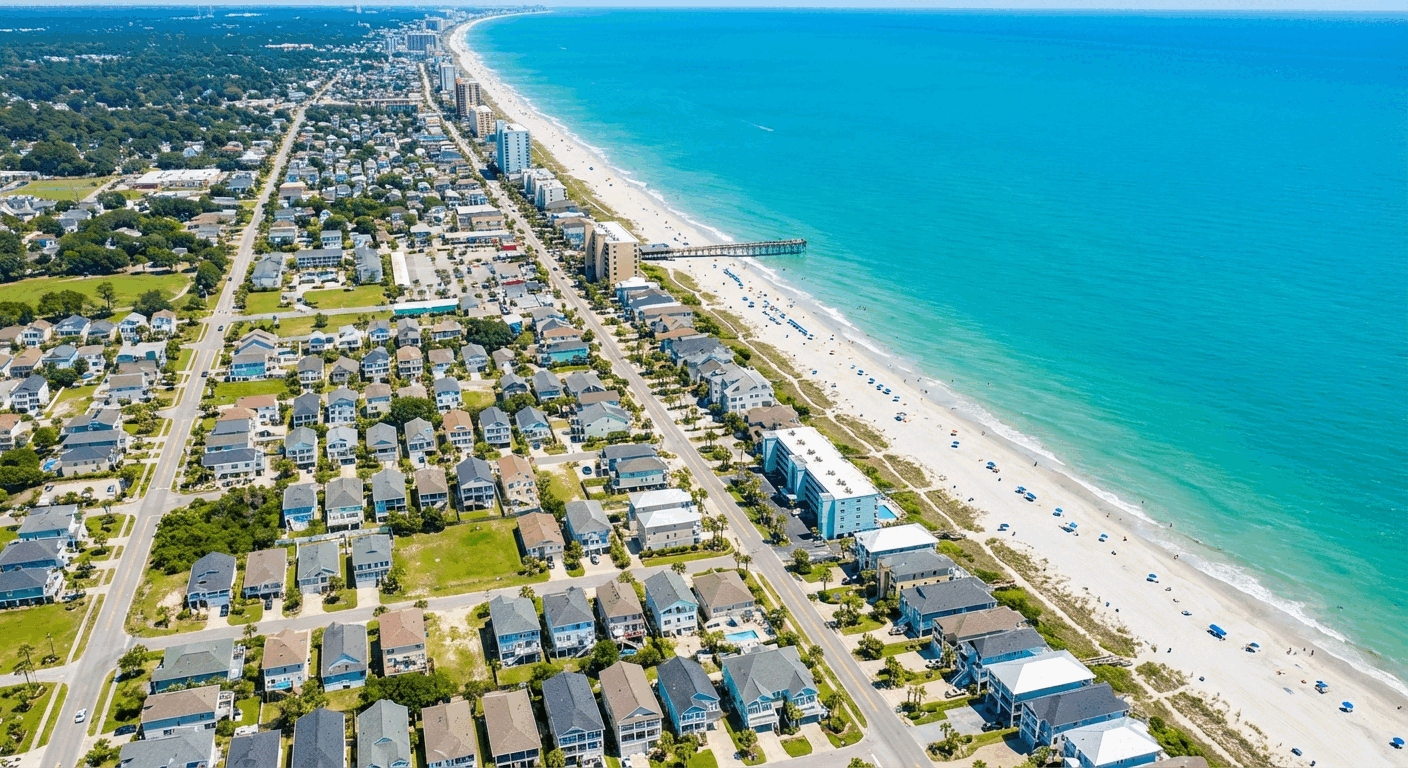
Myrtle Beach and the Grand Strand welcome over 20 million visitors annually, and that seasonal population explosion puts enormous stress on the water system. Understanding how tourism impacts your water quality - and what contaminants are present year-round - helps you make informed decisions about home water treatment.
Grand Strand Water Sources
The Grand Strand Water and Sewer Authority (GSWSA) serves Myrtle Beach, North Myrtle Beach, and surrounding areas. The primary water sources are the Waccamaw River and Bull Creek, supplemented by the Atlantic Intracoastal Waterway during high-demand periods. This is all surface water, treated at the Bull Creek and Myrtle Beach water treatment plants.
At approximately 3 GPG, Grand Strand water is soft by national standards. However, softness doesn't mean the water is free from concerns - chlorine treatment, seasonal quality fluctuations, and PFAS contamination all affect what comes out of your tap.
How Tourism Season Affects Your Water
Myrtle Beach's year-round population of about 35,000 swells to over 200,000 during peak summer months. This 6x increase in water demand has real consequences:
Increased Chlorine Dosing
Higher water volume requires more disinfectant. Summer tap water often has a stronger chemical taste and odor than winter water.
Source Water Stress
Drawing from supplementary sources like the Intracoastal Waterway can introduce different mineral profiles and potential contaminants.
Algae and Organic Matter
Warmer summer temperatures promote algae growth in surface water sources, which can cause taste and odor issues even after treatment.
PFAS and the Textile Mill Lawsuit
PFAS contamination on the Grand Strand has been linked to a textile manufacturing mill that discharged PFAS-containing waste into waterways feeding the Waccamaw River system. A lawsuit is underway, but the contamination is already present in the water supply.
Municipal treatment plants are not equipped to remove PFAS effectively. For families concerned about PFAS exposure, an under-sink reverse osmosis system provides the most reliable point-of-use removal, filtering out 93%+ of PFAS compounds before the water reaches your glass.
Best Water Treatment for Myrtle Beach Homes
For year-round Myrtle Beach residents and vacation rental property owners:
Whole-house carbon filtration - Removes chlorine taste that intensifies during summer months
Reverse osmosis (drinking water) - Removes PFAS, lead, and seasonal contaminants from drinking water
Vacation rental owners - Protect appliances from high-use wear with a water refining system