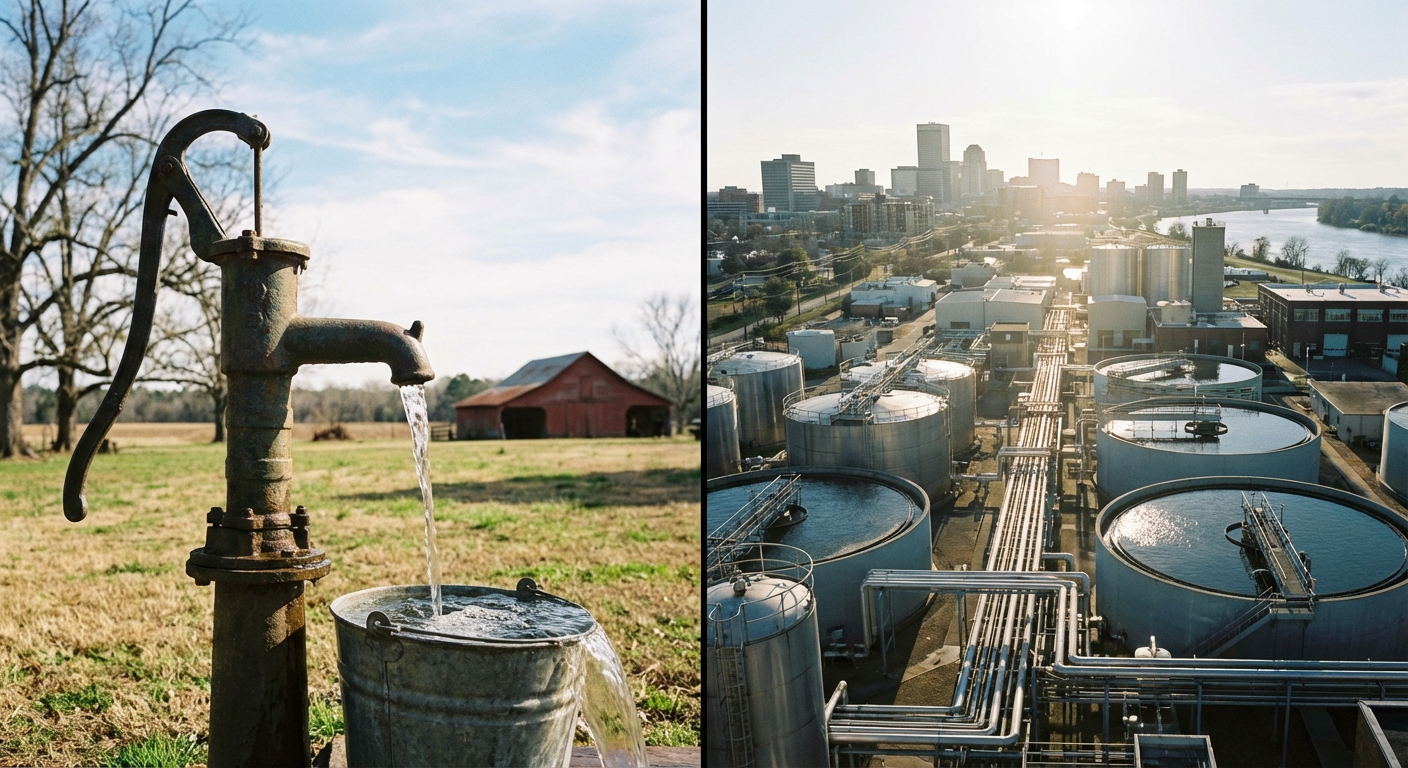
South Carolina homes draw water from two fundamentally different sources: municipal (city) water systems and private wells. Each comes with distinct advantages, challenges, and treatment requirements. Understanding which you have - and what that means - is the first step toward optimal water quality.
City Water in South Carolina
Municipal water systems serve the majority of South Carolina's population. These systems draw from rivers, reservoirs, and aquifers, then treat the water at centralized plants before distributing it through pipe networks. Major providers include:
Charleston Water System - Edisto River and Bushy Park Reservoir (serves Charleston, North Charleston, Hanahan)
Grand Strand Water & Sewer - Waccamaw River (serves Myrtle Beach, North Myrtle Beach)
BJWSA - Savannah River (serves Beaufort, Bluffton, Hilton Head)
Summerville CPW - Middendorf Aquifer deep wells (serves Summerville)
Common City Water Issues
Chlorine/Chloramine Taste
All SC municipal systems use disinfectants. Charleston uses chloramines; others use chlorine. Both create noticeable taste and can form harmful byproducts.
PFAS Contamination
PFAS has been detected across all major SC water systems at varying levels. Municipal treatment does not effectively remove these "forever chemicals."
Distribution System Aging
Water may be clean leaving the treatment plant but pick up contaminants (lead, sediment, bacteria) from aging pipes on its way to your home.
Well Water in South Carolina
Private wells are common in rural areas of Dorchester County, Berkeley County, Horry County, and the Lowcountry. Well water comes directly from underground aquifers without municipal treatment. The homeowner is solely responsible for testing and treating the water.
Common Well Water Issues
Iron and Manganese
Groundwater dissolves iron from rock formations, causing orange-rust stains on fixtures, laundry, and appliances. Common in Conway, Summerville, and rural Beaufort areas.
Hydrogen Sulfide (Rotten Egg Smell)
Sulfur bacteria in groundwater produce hydrogen sulfide gas, creating an unmistakable rotten egg odor. Especially common in Lowcountry wells.
Higher Hardness
Well water from limestone aquifers (Floridan, Middendorf) tends to be harder than surface water, with levels reaching 7+ GPG in some areas.
Bacteria and Pathogens
Without municipal disinfection, well water can harbor E. coli, coliform bacteria, and parasites. UV disinfection is the safest chemical-free solution.
Treatment Recommendations by Source
| System | City Water | Well Water |
|---|---|---|
| Water Softener | Recommended for areas with 4+ GPG | Highly recommended - well water is often harder |
| Carbon Filtration | Essential - removes chlorine/chloramines | Optional - no chlorine to remove |
| Iron/Sulfur Filter | Rarely needed | Often essential - removes iron, sulfur, manganese |
| Reverse Osmosis | Recommended for PFAS removal | Recommended for comprehensive purification |
| UV Disinfection | Optional extra protection | Highly recommended - no municipal disinfection |
Get Your Water Tested
Whether you're on city water or well water, a professional water test is the foundation of the right treatment plan. We test for hardness, iron, pH, TDS, chlorine, and other parameters specific to your area. It's free, takes about 30 minutes, and gives you the data you need to make an informed decision.