
Diagnostic Guide · Lowcountry
Why does my Lowcountry water leave scale, stains, or taste off?
The Lowcountry produces a recognizable cluster of water complaints: white scale on glass, orange spotting in toilets, a chlorine or pool taste, sulfur smell, and the occasional black slime ring in toilet tanks. Each of those has a different cause, a different test, and a different treatment. This guide walks the decision tree so you can stop guessing and target the actual problem.
By Robert Solomon, Owner · Last updated
Start with where the water comes from
Before diagnosing anything, find out which utility serves you (city water) or what aquifer your well draws from. Charleston Water System, Mount Pleasant Waterworks, BJWSA, Hilton Head PSD, GSWSA, and Georgetown County all have meaningfully different chemistry. Our Lowcountry water quality pillar covers each one.
Complaint one: white scale on glass and showerheads
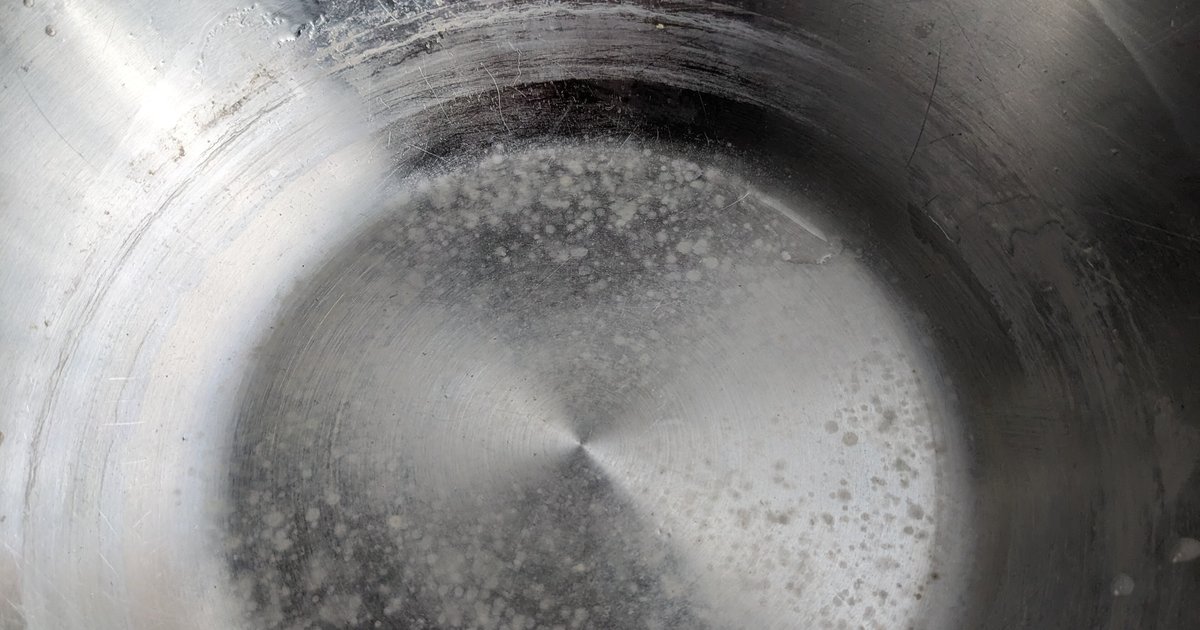
The fingerprint complaint of hard water. White, chalky deposits on shower glass, on faucet aerators, and on showerhead nozzles are calcium carbonate and magnesium hydroxide. Lowcountry city water is officially "moderately soft to slightly hard," typically 3 to 7 grains per gallon. National hard-water maps don't flag the region, but coastal humidity does most of the rest of the work because water dries slowly and minerals get more time to deposit.
Test: A grains-per-gallon hardness test. We bring a test strip on free in-home visits; we also use a titration kit for a precise number.
Treatment: A whole-house ion-exchange softener. See our water softening systems.
Cheaper hack first: Vinegar in a baggie zip-tied over the showerhead overnight breaks down current deposits. It doesn't solve future deposits, but it confirms the diagnosis when the showerhead clears.
Complaint two: orange or brown stains
Iron. On city water this is rare. When we see it on Charleston Water System or BJWSA service, it usually traces back to old galvanized service lines inside the home. On well water, it is the most common complaint we get in rural Berkeley, Jasper, and Horry counties.
Test: Total iron in parts per million, and a separate test that splits ferrous (dissolved) from ferric (particulate).
Treatment: Below 3 ppm ferrous iron, an oversized softener with iron-resistant resin. Above 3 ppm or with any ferric or bacterial iron, an air-injection oxidation filter followed by a softener. Our iron in well water article goes deeper.
Complaint three: chlorine or pool taste
Every major Lowcountry utility uses chloramine for residual disinfection. Chloramine is more persistent than free chlorine, and the taste reads as more like a pool than chlorine alone. If your water tastes "off" but you can't quite name it, chloramine is almost always the answer on city water.
Test: A total chlorine residual reading (chloramine reads as combined chlorine on simple test kits). Above 1.5 ppm is detectable to most palates.
Treatment: Whole-house catalytic carbon for the whole house, point-of-use carbon or RO at the kitchen sink. Standard granular carbon does not catch chloramine within the contact time of a typical home filter; catalytic carbon does.
Complaint four: rotten-egg smell
Hydrogen sulfide. The diagnostic split is which side of the faucet smells.
Hot only: Almost always the water heater anode rod reacting with sulfate. Replace the magnesium rod with an aluminum-zinc rod, flush the tank, and the smell resolves in most cases.
Both hot and cold: Gas in the source water. Treatment is an oxidation filter (air-injection, ozone, or chlorine injection depending on concentration), followed by activated carbon polish. Our sulfur smell article covers this in depth.
Not sure which complaint matches your symptom?
Twenty-minute in-home test confirms the diagnosis. We'll write you a one-page report you can keep, whether you hire us or not.
Complaint five: black slime in toilet tanks
Iron or manganese bacteria forming a biofilm. Common on well water with iron or manganese above trace levels. Not dangerous; just unsightly and corrosive over time.
Test: Iron, manganese, and a manual look for biofilm sloughing off when the tank fills.
Treatment: Shock chlorination of the well to kill the biofilm short term. Permanent control needs an oxidation filter sized to the contaminant load. A UV system downstream prevents reintroduction.
Complaint six: water "tastes flat" or "tastes off" at the kitchen
Common drivers: dissolved organic matter from surface-water source, disinfection byproducts (TTHMs and HAA5), total dissolved solids above 300 to 400 ppm, or specific contaminants like PFAS that don't have a taste themselves but ride along with other compounds that do.
Test: TDS meter (available at any hardware store) plus your utility's CCR for the regulated parameters.
Treatment: Point-of-use reverse osmosis at the kitchen sink. See our RO pillar.
Complaint seven: cloudy water
Cloudy water that clears bottom-to-top within 30 seconds is entrained air from the distribution system. Harmless. Cloudy water that does not clear is sediment (rare on city water; common after well-pump cycling or well-pressure-tank issues) or hardness scale flushing through aging plumbing. A 5-micron sediment prefilter at the point of entry handles the first; a softener handles the second.
What changes seasonally on Lowcountry water
Symptoms are not static. Charleston Water System's Edisto River and Bushy Park Reservoir source blend shifts across the year. In late summer, when reservoir storage carries a higher organic load, disinfection-byproduct readings rise and the chloramine "pool" taste at the kitchen tap gets sharper. In early spring, after heavy rain, sediment from the Edisto can push more particulate through the distribution system and you see brief cloudiness at first-draw faucets. BJWSA shows a similar seasonal swing on the Savannah River source, and Grand Strand Water and Sewer Authority sees more organic carbon load in summer from the Intracoastal Waterway. If your symptom appears only at certain times of year, source-water seasonality is usually the cause and a whole-house catalytic carbon filter resolves the worst of it. For a deeper read on each utility's source mix, the Lowcountry water quality pillar is the right next stop.
What changes after a hurricane or boil-water notice
Tropical storm season runs June through November, and the coast averages one or two boil-water notices per year somewhere in the service area. After a notice clears, residents commonly report a sudden uptick in chlorine taste because the utility temporarily increases free-chlorine dosing to clear the distribution lines. That elevated chlorine settles back to baseline within a week or two. If your tap suddenly tastes more chlorinated after a recent boil-water event, the cause is utility flushing, not your home plumbing. Our hurricane season prep article and the post-flood well disinfection article cover both the city and well sides.
What changes when you add a tankless water heater
The post-2018 wave of tankless installs in Mount Pleasant, Daniel Island, Park West, and newer Bluffton subdivisions made hard-water scale a much bigger problem than it used to be. Tankless heat exchangers concentrate mineral exposure in narrow heated passages. Even at 3 to 5 grains per gallon of hardness, scale can foul the heat exchanger within two cooling seasons and void most tankless warranties. If you see a sudden drop in hot-water flow at multiple fixtures and the tankless is more than two years old, scale buildup is the most likely cause, and a softener combined with a vinegar-flush descale of the heater is the standard fix. Our water heater efficiency article covers the calculation in more detail.
The decision tree at a glance
| If you see/taste/smell this | Most likely cause | Test first | Recommended Method |
|---|---|---|---|
| White scale on glass | Hardness | Grains per gallon | Ion-exchange softener |
| Orange stains | Iron | Total iron, ferrous/ferric split | AIO + softener |
| Pool/chlorine taste | Chloramine | Total chlorine | Catalytic carbon |
| Sulfur, hot only | Anode rod | Visual at heater | Replace anode rod |
| Sulfur, hot and cold | H₂S in source | Sulfide test | Oxidation filter |
| Black slime in toilet tank | Iron/manganese bacteria | Iron, manganese | Oxidation filter + UV |
| Flat taste at kitchen | TDS, DBPs, PFAS | TDS meter + CCR review | Point-of-use RO |
| Cloudy water (clears) | Entrained air | None | No action |
| Cloudy water (stays) | Sediment | Visual at prefilter | 5-micron sediment prefilter |
Call a professional if…
- Symptoms changed suddenly. Sudden changes rarely come from your home plumbing.
- More than one symptom appears together. Iron-plus-hardness-plus-sulfide systems are sized as a package, not as separate appliances.
- You're seeing a coliform-positive bacterial test. Shock chlorination done wrong reintroduces the problem.
- You have a tankless water heater and any hardness symptom. Scale voids most tankless warranties.
- You're not sure whether it's the home plumbing or the utility. We can read the CCR with you and rule one side out.
What to do this week
- Walk through your home with a notepad. Write down which symptom appears at which fixture.
- Pull the most recent CCR for your utility. Our Lowcountry pillar has direct links.
- Buy a TDS meter from any hardware store. It is an inexpensive single diagnostic.
- Schedule a free in-home water test. We'll bring a hardness/chlorine/TDS/pH screen and confirm or rule out each suspected cause.
FAQ
Why is there white scale on my shower glass in Charleston?
White scale on glass is calcium and magnesium deposit, the visible signature of hard water. Charleston Water System and BJWSA both report hardness in the 3 to 7 grains per gallon range. That is enough to leave visible deposits in humid coastal conditions where water dries slowly. A whole-house ion-exchange softener prevents the deposit from forming.
Why do my faucets and showerheads have orange or brown spots?
Orange or brown spotting points to iron, not hardness. On city water this is rare and usually traces to old galvanized pipe inside the home. On well water iron above 0.3 ppm is the most likely culprit.
Why does my water taste like a swimming pool?
Chloramine. Every major Lowcountry utility disinfects with chloramine. Chloramine has a more persistent residual at the tap than free chlorine. A catalytic carbon whole-house filter or an under-sink RO removes it.
Why does my hot water smell like rotten eggs but the cold doesn't?
The water heater anode rod is reacting with sulfate to produce hydrogen sulfide. Replacing the standard magnesium anode rod with an aluminum-zinc rod resolves it. If the smell is on both hot and cold, the gas is in the source water.
Why is there a black slime ring in my toilet tank?
Iron or manganese bacteria forming a biofilm. Shock chlorination kills it short term; permanent control needs an oxidation filter sized to the contaminant.
Why is my water cloudy when I first turn the faucet on?
Air entrained in the water from the distribution system, which clears within a minute as the cloud rises to the top of the glass. Harmless. If it does not clear, it is sediment, and a prefilter resolves it.