
Diagnostic Guide · Charleston SC
Why Charleston Tap Water Smells Like Marsh in Late Summer
If your Charleston, Mount Pleasant, or Summerville tap water smells like the marsh in late summer, you are not imagining it. Bushy Park Reservoir, the source water for Charleston Water System, sees seasonal algal blooms that produce MIB and geosmin. Both are completely harmless. Both are extremely smell-active. The fix at home is activated carbon, in the form a refrigerator cartridge, a faucet filter, or a whole-house unit.
By Robert Solomon, Owner · Last updated
Where Charleston water actually comes from
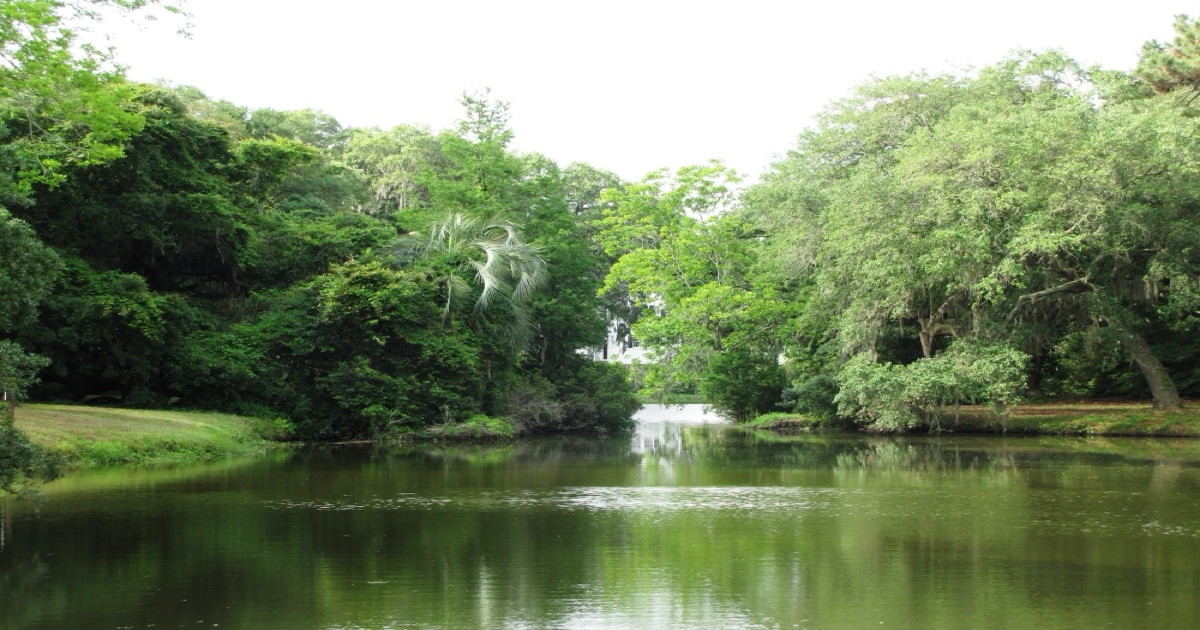
Most Charleston residents picture the Cooper River when they think about local water, and that is roughly correct. Charleston Water System draws raw water from Bushy Park Reservoir in Berkeley County, a 220-acre impoundment that holds water diverted from the Cooper River via the Bushy Park Industrial Complex. The reservoir is fed by the West Branch of the Cooper, which in turn drains a large portion of Berkeley County and a slice of the Francis Marion National Forest. Water sits in Bushy Park for days to weeks before it is pumped to the Hanahan Water Treatment Plant, treated with coagulation, sedimentation, filtration, and chloramine disinfection, then sent through hundreds of miles of distribution main to roughly 175,000 customers across Charleston, parts of North Charleston, West Ashley, James Island, and wholesale to Mount Pleasant Waterworks and several other utilities. For a broader read on what flows out of these source waters, our Lowcountry water quality pillar walks through every utility on the coast.
The reservoir source is what makes the marsh smell a Charleston seasonal pattern instead of a Charleston year-round one. Reservoirs warm differently than rivers. They stratify, they hold nutrients longer, they let algae grow in ways that flowing water does not.
What MIB and geosmin actually are
The two compounds responsible for the marsh smell are 2-methylisoborneol (MIB for short) and geosmin. Both are organic molecules produced by cyanobacteria and certain green algae as they grow and die. MIB smells musty or moldy. Geosmin smells earthy, like a freshly turned garden bed or wet soil after a summer rain. In a reservoir bloom, both compounds are usually produced together, and the combined smell is what most Charleston residents describe as "marsh" or "swamp."
The astonishing fact about MIB and geosmin is the human nose. People can detect MIB at concentrations as low as 10 parts per trillion and geosmin at roughly 10 to 30 parts per trillion. For scale, 10 parts per trillion is one drop in 500 Olympic swimming pools. That sensitivity is evolutionary. Geosmin in particular is the smell humans associate with rain on dry ground, and our nose is tuned to find it from very far away. The American Water Works Association (AWWA) treats MIB and geosmin as a benchmark problem precisely because no realistic treatment train can drive concentrations below the nose threshold once a bloom is producing them at the source.
The summer bloom cycle at Bushy Park
The Lowcountry summer is a near-perfect bloom incubator. By late July, surface water in Bushy Park Reservoir reaches the mid 80s Fahrenheit. Long daylight, agricultural and urban runoff from the upstream watershed, and stratified water that does not mix top to bottom create the conditions cyanobacteria need. Blooms usually start visible in early August, peak in late August through mid September, and fade through October as water cools and daylight shortens. Some years the bloom is brief and the smell is barely noticeable; other years the bloom is heavy and the smell is in every glass for six straight weeks. Hurricane season layers a second factor on top: a late-summer storm can stir nutrients up from the reservoir bottom and trigger or extend a bloom that would otherwise have ended.
The South Carolina Department of Health and Environmental Control (SC DHEC, recently restructured as SCDES) tracks surface water nutrient loading in the Cooper River basin, and the broad trend across the Southeast over the last decade has been longer warm seasons and earlier bloom onset. We see that in the field as customer calls that used to start in mid August now start in late July.
What Charleston Water System does about it
CWS is a sophisticated utility and has been on the MIB and geosmin problem for years. The conventional treatment train at the Hanahan plant (coagulation, sedimentation, sand filtration, chloramination) does not remove MIB or geosmin at the levels that matter for smell. The molecules are too small and too unreactive for those steps to touch. During heavy bloom periods, CWS dose-adjusts powdered activated carbon (PAC) into the treatment basins, which adsorbs a meaningful share of the compounds before they leave the plant. Some utilities also run permanganate or ozone pre-oxidation, which can break geosmin and MIB into less smelly byproducts. CWS publishes the actions it takes each year in its Annual Water Quality Report (the Consumer Confidence Report), and the report consistently notes that bloom seasons require additional PAC dosing.
The honest limitation is that no utility in the country fully removes MIB and geosmin during a heavy bloom. The molecules are too potent and human noses are too sensitive. CWS can soften the smell, push it down toward threshold, and keep it from running away, but the only way to put zero MIB and geosmin in your glass is to add activated carbon at your home as a polishing step. That is true of every reservoir-sourced utility in the country during bloom season.
Tired of the marsh smell in your kitchen?
A free 20-minute in-home test confirms exactly which compounds are in your water, and which kind of carbon (block, granular, or whole-house) actually solves it for your home.
Is the marsh smell harmful?
No. MIB and geosmin are not regulated by the EPA as primary contaminants because neither has a known health effect at the concentrations the human nose can detect. The compounds are produced by living organisms in essentially every freshwater system in the country, and they are not toxic at any concentration realistically found in finished drinking water. The EPA does not even publish a secondary maximum contaminant level for MIB or geosmin, because both are pure aesthetic compounds: they affect taste and smell, not safety. Charleston Water System monitors the compounds because customers care about the smell, not because anyone needs to drink less of the water.
The follow-up question many customers ask is whether the algae themselves are dangerous. The cyanobacteria that produce MIB and geosmin can also produce a separate group of compounds called cyanotoxins (microcystin, anatoxin, cylindrospermopsin) that do have health implications at certain levels. CWS monitors for cyanotoxins independently, treats for them when needed, and publishes results in the annual report. The marsh smell is a useful early-warning signal that a bloom is active, but the smell itself is not the toxin and the toxin is not what makes the water smell.
Where you will notice it first in a Charleston home
The smell shows up first where water is held still and warm. Hot coffee and tea concentrate the volatiles, so a Monday morning cup is usually the first complaint. Pasta water and steamed vegetables follow. The ice maker in the refrigerator is next, because the ice traps the compounds as it freezes and then releases them when the ice melts in a drink. Cold tap water and the bathroom shower are often the last places to register the smell because cold water and rapid drain reduce how much molecule reaches the nose. If only the hot water smells off, you may instead be dealing with a separate issue covered in our sulfur smell article. If only the bathroom smells off, the issue is more likely in your shower drain than in your water.
The home fix, activated carbon
Activated carbon is the one technology that consistently removes MIB and geosmin at the parts-per-trillion levels that matter. Carbon works by adsorption, which means the molecules stick to the carbon surface as the water passes through. A single gram of high-quality activated carbon has roughly 1,000 square meters of internal surface area, which is the entire reason the technology works on compounds at such low concentrations. Charleston homes have three practical carbon options.
The smallest option is a faucet or refrigerator cartridge with a granular activated carbon (GAC) bed. These are inexpensive, install in minutes, and work well for the first three to four months of cartridge life. The catch is that bloom-season MIB and geosmin saturate the bed faster than the cartridge label suggests, so cartridges installed in May may be exhausted by August. Replacing the cartridge at the start of bloom season is the simplest fix.
The next option is an under-sink carbon block, usually paired with a reverse osmosis unit. A carbon block packs the same carbon into a dense cylinder that water moves through more slowly, which gives the carbon more contact time and improves removal at very low concentrations. An under-sink unit handles cold drinking and ice-maker water, and is the standard recommendation for Charleston households who want the smell out of their kitchen without filtering the whole home. Our reverse osmosis pillar and RO comparison article cover that path in detail.
The full-home option is a whole-house carbon unit at the point of entry, sometimes called a "carbon backwash filter" or in our installs a catalytic-carbon-on-top water refiner. A whole-house carbon unit treats every fixture, so the shower, the laundry, the dishwasher, and every tap get the same low-smell water. For homes where the smell is noticeable in multiple rooms, this is the cleanest solution. We discuss the equipment tier and what a coastal install actually looks like in our whole-house install guide.
Recommended Method by condition
| Condition at your home | Recommended Method |
|---|---|
| Smell only in coffee, tea, and ice; cold water tastes fine | Replace refrigerator cartridge at start of bloom season; consider faucet GAC for kitchen |
| Smell in cold water at kitchen tap during August and September | Under-sink carbon block or reverse osmosis unit at the kitchen |
| Smell in multiple rooms (kitchen, master bath, laundry) | Whole-house catalytic carbon at point of entry |
| Smell plus white scale on glass and fixtures | Whole-house carbon plus ion-exchange softener (combined refiner unit) |
| Smell in a rental or short-term property | Carafe-style GAC pitcher in kitchen; replace monthly through bloom season |
Cheaper steps to try first
Before installing anything, two low-effort steps are worth running. First, pour a glass from the cold tap and let it sit on the counter uncovered for two hours. If the smell fades, much of what you are detecting is dissolved gas (often residual chloramine) and a simple carafe filter handles it. If the smell stays even after the water has been sitting, you are dealing with MIB or geosmin, which need adsorptive treatment. Second, swap the cartridge in any refrigerator or under-sink filter you already own. Cartridges last six months on paper, but bloom-season MIB and geosmin can exhaust them in a third of that time. A fresh cartridge often resolves the complaint for the rest of the season at low cost.
Call a professional if:
- The smell does not fade after a fresh cartridge in an existing filter; you may need a higher-grade carbon block sized to your water use.
- The water also looks cloudy or has visible particulates; that points to a distribution event (main flushing, line break) that needs separate diagnosis.
- The smell is present year-round, not just August through October; the cause is most likely a plumbing issue, water heater anode reaction, or a private well rather than the city source.
- You are on a private well in addition to or instead of CWS; well-water odor patterns are covered in our well water treatment guide.
- You have an infant, an immunocompromised household member, or anyone who is highly sensitive to taste and smell; whole-house treatment removes the variable rather than chasing it.
How Charleston compares to neighboring utilities
Charleston is not unusual. Every reservoir-sourced utility on the Atlantic seaboard sees some version of the seasonal MIB and geosmin pattern. Mount Pleasant Waterworks takes wholesale supply from CWS for part of its delivery, so customers in MPW territory frequently notice the same smell during bloom season. Our Mount Pleasant water article covers the hardness pattern that travels with the same source. Summerville CPW draws from the Middendorf aquifer instead of a reservoir, and aquifer water generally avoids the MIB and geosmin pattern because algae cannot grow underground. Some Summerville readers do notice an earthy note in their water, but the cause is usually different (the aquifer carries naturally occurring fluoride and small amounts of organic material, covered in our Middendorf aquifer article). BJWSA in Bluffton and Hilton Head draws from the Savannah River and sees its own bloom-season pattern with different timing.
What changes after installing carbon
Most Charleston homes that install carbon (at any of the three scales) notice the change immediately. Coffee tastes brighter and less swampy. Ice cubes no longer carry an aftertaste into iced tea or cocktails. The bathroom shower stops smelling earthy after the first hot rinse of the day. Whole-house installs add the laundry and dishwasher benefits as well: fabrics smell fresher off the dryer, glasses come out of the dishwasher without a faint film of organic residue. The carbon does not change the hardness of the water (that is a separate problem, covered in our hardness guide), and it does not remove the trace chloramine that CWS uses for residual disinfection (catalytic carbon does, standard carbon mostly does not). Pairing carbon with a softener and an under-sink RO is the combination that gives a Charleston home water that performs the same on a bloom day in September as on a clear day in March.
What to do this week
- Pull the current Charleston Water System Annual Water Quality Report (charlestonwater.com). The bloom-season PAC actions are listed in the customer notes section.
- Check the install date on any refrigerator or under-sink cartridge in your home. If it is older than four months, replace it.
- Pour a glass of cold tap water and let it sit two hours; if the smell stays, the cause is MIB or geosmin and a fresh cartridge or new carbon unit is the fix.
- Schedule a free in-home water test. We confirm what compounds are in your water, what carbon scale fits your home, and write you a one-page summary you can keep whether you hire us or not.
FAQ
Is the marsh smell in Charleston tap water safe to drink?
Yes. MIB and geosmin are the compounds responsible, both produced by reservoir algae. Neither has a federal health-based standard because neither is a health concern at the parts-per-trillion levels people can smell. CWS monitors both, and the water stays safe to drink throughout bloom season.
Why does it only happen in August and September?
Bushy Park Reservoir reaches the mid 80s by late summer. Warm water, long daylight, and nutrient runoff trigger algal blooms that release MIB and geosmin. By October, cooler water shuts the bloom down and the smell fades from the tap.
Does boiling remove the marsh smell?
No. Both compounds are heat-stable at boiling temperature. Boiling concentrates them rather than removing them, which is why coffee and tea show the smell more strongly than cold water. Activated carbon is the only practical home fix.
Will a refrigerator filter remove it?
Most fridge filters use a small carbon bed and reduce MIB and geosmin noticeably for the first few weeks of cartridge life. Bloom-season concentrations saturate cartridges faster than the six-month label predicts. Replace at the start of bloom season.
Does it affect Mount Pleasant and Summerville too?
Mount Pleasant Waterworks takes wholesale supply from CWS and sees the same pattern. Summerville CPW draws from the Middendorf aquifer and is generally unaffected. Distribution-boundary homes can get a blended supply and notice it intermittently.
Is it different from the chlorine smell?
Yes. Chlorine smells sterile, like a swimming pool. MIB and geosmin smell earthy, like a freshly turned garden bed. The two can occur together because CWS uses chloramine for residual disinfection year-round, but the marsh note is distinct and seasonal.
Related reading
- Lowcountry water quality pillar
- Reverse osmosis drinking water pillar
- Whole-house water filtration
- Water filtration in Charleston
- Water filtration in Mount Pleasant
- Water filtration in Summerville
- Solomon service area
- Water quality in Charleston SC
- Mount Pleasant hard water and white scale
- Lowcountry water diagnostic guide
- Chlorine and chloramine in tap water
- Why does my water smell like sulfur
- Whole-house install on the SC coast
- Reverse osmosis drinking water
- Middendorf aquifer in Summerville
- Hard water problems in South Carolina
- Well water treatment guide